A home represents shelter, stability, and one of the largest financial investments a person will make in their lifetime. At the very top of this investment sits the roofing system, acting as the primary shield against volatile weather patterns. From scorching summer heat and torrential downpours to high winds and heavy snowfall, the roof bears the brunt of the elements year-round. Because it functions above eye level, it is remarkably easy for homeowners to adopt an out of sight, out of mind mentality regarding its structural health.
This passive approach can lead to severe consequences, particularly following a severe weather event. Major storms, whether they bring high velocity winds, heavy hail, or intense rainfall, subject your roof to immense mechanical stress. Even a roof constructed from premium materials can suffer localized failure during a single storm. Failing to inspect the roofing system immediately after extreme weather allows minor, hidden anomalies to fester into catastrophic structural issues that threaten the safety and economic value of your entire property.
Catch Hidden Leaks Before They Cause Massive Internal Rot
The most immediate danger following a major storm is water infiltration. When people think of a leaky roof, they often picture a dramatic scenario involving water dripping visibly from a living room ceiling into a bucket. While these severe failures do occur, the vast majority of storm-induced leaks are slow, silent, and entirely hidden from plain view.
High winds can lift shingles just enough to break the underlying adhesive seal, allowing wind-driven rain to bypass the water barrier. Similarly, hail impacts can fracture the asphalt mat of a shingle, creating micro-fissures where water can slowly seep through over time.
Once water breaches the outer roofing layer, it pools on the wooden roof decking, slowly soaking into the attic insulation. Because insulation acts like a giant sponge, it can hold thousands of ounces of moisture before a single drop registers on your interior drywall finishes. By the time a water stain appears on your upstairs ceiling, the moisture has likely been present for weeks or even months. This chronic dampness triggers wood rot within your structural rafters, compromises the integrity of your roof decking, and fosters rapid, toxic mold growth that directly undermines indoor air quality and family health. Inspecting the roof and attic promptly catches these breaches while they are still dry or confined to minor repairs.
Protect Your Rights Under Strict Insurance Claim Deadlines
When a severe storm inflicts physical damage on your home, your homeowners insurance policy is designed to help cover the costs of restoration. However, securing this financial assistance is conditional upon adhering to strict procedural rules and timelines dictated by your insurance provider.
Many homeowners assume they have an indefinite window of time to file a storm damage claim, but most insurance policies require incidents to be reported within a specific timeframe following the official meteorological event. This window typically ranges from one to two years, but some policies feature strict limitations as short as ninety days for specific types of wind or hail damage.
-
Establishing the Date of Loss: Insurance adjusters rely on localized weather radar data to verify if a storm possessing damaging wind speeds or hail sizes actually occurred over your home on the date you claim. If you wait months to inspect your roof and discover damage later, it becomes difficult to prove exactly which storm caused the issue, giving the insurance company a legitimate reason to deny your claim.
-
Preventing Negligence Denials: Insurance policies explicitly state that homeowners are responsible for mitigating further damage after an event. If a minor storm punctures your roof and you fail to inspect it, a subsequent rainstorm weeks later might ruin your interior furniture and drywall. The insurance company may cover the initial roof repair but deny coverage for the interior destruction, arguing that your failure to inspect and tarp the roof constituted home negligence.
Identify the Subtle Anatomy of Wind and Hail Destruction
Not all storm damage is visually glaring. While a fallen tree limb across a ridge line is impossible to miss, the structural compromises caused by wind and hail are often remarkably subtle and require conscious, methodical evaluation.
Wind Damage Patterns
High winds do not always rip shingles completely off the roof structure. Often, wind creates a peeling effect. As gusts catch the edge of a roof plane, they break the thermal sealant strip holding overlapping shingles together.
The shingle lifts upward during the gust and drops back flat into place when the wind subsides. To a casual observer looking from the lawn, the roof looks completely intact. However, because the seal is broken, the shingle will flap in future moderate breezes, eventually causing the fiberglass mat to crease and snap completely along the nail line. Furthermore, unsealed shingles leave the roof vulnerable to leaks during subsequent normal rainstorms.
Hail Impact Markers
Hailstones inflict damage through dynamic impact velocity. When a large hailstone strikes an asphalt shingle, it acts like a hammer blow, crushing the protective ceramic granules into the underlying asphalt matrix.
This impact creates a distinct, circular bruise. The immediate result is granule loss, exposing the black, raw asphalt underneath to direct solar ultraviolet rays. Within a few weeks of sun exposure, the unprotected asphalt dries out, becomes brittle, and cracks open, creating a direct path for rainwater to enter the home structure.
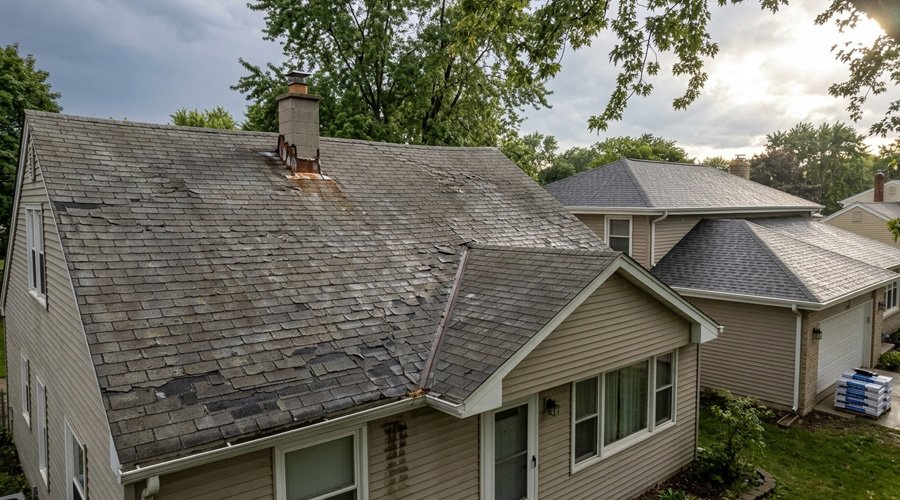
Surveying Storm Impact Points
Evaluating a roof after an extreme weather event often reveals localized fracturing and material displacement that requires swift professional intervention.
Prevent Cumulative Damage and Preserve Structural Longevity
A roofing system operates as an integrated ecosystem. Each component, including the dripping edge, underlayment, shingles, flashing, and ridge vents, relies on the structural integrity of the surrounding pieces to function properly. When one section is compromised by a storm, the workload shifts to adjacent areas, accelerating the overall wear and tear of the entire system.
For instance, if a storm blows off a small section of ridge capping at the peak of your roof, the underlying wood is directly exposed. As rain enters this peak, it runs down the slope beneath the surrounding shingles, rotting the nails holding those undamaged shingles in place.
What began as a simple, inexpensive matter of replacing a few feet of ridge cap can rapidly expand into a full roof replacement because the structural fastening system underneath has been ruined by cascading water. Checking your roof immediately allows you to execute small, localized spot repairs that isolate the damage, preserving the useful life of the rest of your roof for another decade or two.
Frequently Asked Questions
How can I safely inspect my roof for storm damage without climbing onto a high ladder?
You should never walk on a roof immediately after a storm, as loose shingles, wet algae, and structural weaknesses make it incredibly dangerous. Instead, execute a thorough ground-level inspection using a high-powered pair of binoculars. Walk around the entire perimeter of your yard, looking closely at the roof planes, valleys, and eave lines. Look for displaced shingle tabs, exposed underlayment, or dented metal flashing. You can also check your attic interior with a flashlight for damp rafters, and look at your lawn and downspout splash blocks for unusual accumulations of loose shingle granules.
What are the indicators of storm damage on a metal roof compared to asphalt shingles?
While asphalt shingles crack, tear, or lose granules, metal roofing systems react differently to storm stress. Hail storms will leave visible cosmetic or structural dimples and dents across the flat metal panels, which can compromise anti-corrosion protective coatings. The primary threat from wind storms to a metal roof involves the fastening screws. High winds can induce uplift pressures that loosen the rubber grommet washers or back out the screws entirely, creating small open holes around the fasteners where rainwater can easily enter.
Does homeowners insurance cover the full cost of roof replacement if the roof is old?
The payout structure depends entirely on whether your policy features Actual Cash Value or Replacement Cost Value coverage. If you have a Replacement Cost Value policy, the insurance company will cover the current actual cost to replace the roof with new, equivalent materials, minus your deductible. If your policy is written as Actual Cash Value, the insurer factors in depreciation based on the age of your roof. For example, if a twenty-year-old roof is destroyed, they will subtract twenty years of wear from the payout, leaving you to cover a significant portion of the replacement cost out of pocket.
How do I recognize storm damage on roof flashing and chimney seals?
Roof flashing refers to the thin sheets of galvanized steel or aluminum installed around roof intersections, chimneys, skylights, and valleys to redirect water away from joints. High winds can warp, loosen, or completely peel these metal panels away from the masonry or roof transition. Inspect these areas for lifted edges, missing caulking beads, or cracks in the mortar joints around the chimney cap, as damaged flashing is the single most common source of localized roof leaks following high-wind systems.
What should I do immediately if I discover an active roof leak inside my attic after a storm?
If you discover an active leak, your immediate priority is to mitigate internal property damage. Place a large plastic bucket or plastic storage bin under the drip point in the attic to catch the water, and place old towels around the area to absorb splashes. If water is pooling on top of the drywall ceiling of your living space below, drill a tiny hole directly in the center of the damp ceiling spot using a screwdriver to allow the trapped water to drain cleanly into a bucket, preventing the entire drywall ceiling panel from collapsing due to excessive weight.
Can a severe storm damage a roof without causing shingles to fall off or crack?
Yes, severe storms frequently inflict invisible damage known as structural framing deflection or structural uplift. When powerful wind shears blast over a home roof structure, they create a strong aerodynamic vacuum effect on the leeward side of the roof, similar to the lift on an airplane wing. This pressure can pull upward on the entire roof truss framework, loosening the internal hurricane straps, collar ties, and structural nails in the attic without showing a single disrupted shingle on the exterior facade.