Discovering a pest infestation in your home can be incredibly stressful. Whether you are dealing with a sudden surge of ants in the kitchen, a hidden colony of cockroaches, or the persistent threat of rodents, hiring a professional exterminator is the most definitive way to reclaim your living space.
However, many homeowners mistakenly believe that the entire burden of eradication falls solely on the shoulders of the visiting technician. In reality, the ultimate success of a professional pest control application depends heavily on the preparation work you perform before the specialist arrives at your front door.
A thorough preparation routine achieves two critical outcomes. First, it ensures the safety of your family, your pets, and your personal belongings by keeping them isolated from specialized treatment products. Second, it grants the technician unhindered access to the deep structural corners, entry points, and harboring zones where pests actively breed and hide.
By executing a systematic preparation strategy, you maximize the efficiency of the service and significantly accelerate the elimination timeline.
Deconstructing and Preparing the Kitchen Hot Zone
The kitchen is the absolute center of activity for the vast majority of household pests. It provides the essential trio of survival resources: reliable warmth from electronic motors, abundant water from plumbing fixtures, and consistent food from cooking residues. Because this zone requires intensive targeted applications, it demands the highest level of detail during your preparation process.
Total Countertop Clearance
Begin by completely clearing every item off your kitchen countertops, including small appliances such as toasters, coffee makers, blenders, and spice racks. Move these items to a central location like a dining room table and cover them with a clean, heavy sheet.
Leaving the countertops completely bare gives the technician full access to the critical perimeter junction where the wall backsplash meets the counter surface. This seam is a primary transit highway for foraging ants and foraging insects.
Comprehensive Food Isolation
Do not leave any food products exposed to the open air. Move all fresh fruits, bread products, and open snack boxes directly into the refrigerator or seal them tightly within heavy-duty plastic storage bins.
Keep in mind that cardboard packaging provides zero defense against determined pests or airborne treatment particles, so transferring dry goods like cereals and pasta into airtight glass or hard plastic containers is highly recommended.
Accessing the Sink Sub-Cabinet
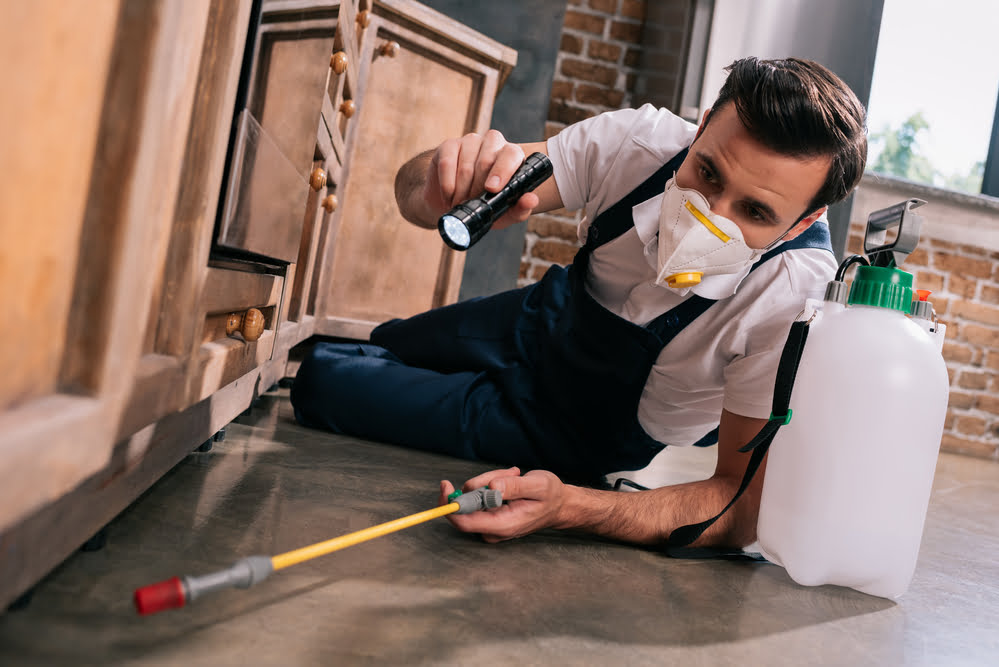
The cabinet directly beneath your kitchen sink is the most important focal point for residential pest treatments. Most crawling insects enter the home through the micro-gaps surrounding the hot and cold plumbing supply pipes.
Completely empty this cabinet by removing all cleaning chemicals, trash receptacles, and spare sponges. Storing these items in a temporary box outside the kitchen allows the technician to immediately inspect the area, seal foundational gaps, and apply specialized baits right at the primary point of entry.
Modifying Living Spaces and Bedrooms
Pests do not restrict themselves to the kitchen; they frequently seek shelter in the quiet, undisturbed areas of living rooms and bedrooms. Preparing these zones requires adjusting your layout to optimize the impact of perimeter barrier treatments.
Pulling Furniture Away from Walls
Professional perimeter treatments are designed to target the exact intersection where your flooring meets the baseboards. Pests naturally travel along these dark borders to avoid open spaces.
Walk through your bedrooms and living areas and pull all substantial furniture pieces, including sofas, heavy armchairs, beds, dressers, and bookshelves, at least twelve inches away from the walls. This creates a continuous walkway for the technician to inspect and treat the baseboard line without struggling to navigate tight spaces.
Decluttering Floors and Closets
Remove all loose items from your flooring surfaces. Toys, shoes, storage bins, and loose clothing should be organized and elevated off the ground.
If your service call targets pests that frequent dark enclosures, such as spiders or silverfish, open up your bedroom closets and clear out items stored directly on the closet floors. Providing a clear line of sight into these low-traffic zones ensures no harboring pocket is accidentally overlooked during the service.
Protecting Pets, Children, and Household Textiles
Your primary consideration during any professional extermination service must be the health and well-being of your family members and domestic animals. Proper isolation practices prevent accidental exposure and eliminate unnecessary safety risks.
Securing Domestic Animals
Different types of domestic pets require tailored management strategies during a home service:
-
Dogs and Cats: These animals are highly curious and will naturally want to investigate the technician or sniff freshly treated surfaces. Arrange to have dogs and cats spend the day at a local kennel, stay with a trusted neighbor, or remain securely crated in a completely separate structure until all applied products are thoroughly dry.
-
Birds and Reptiles: Avian species and small reptiles possess exceptionally sensitive respiratory systems that are vulnerable to airborne elements. Always relocate bird cages and reptile enclosures completely out of the home for the duration of the service, or consult with your technician regarding strict isolation protocols.
-
Aquariums: If you own a large fish tank that cannot be moved, turn off the integrated air pump to prevent it from drawing in room air. Seal the top of the aquarium tightly with plastic wrap and cover it with a thick towel. You can safely reactivate the filtration system once the home has been fully ventilated post-treatment.
Isolating Child Environments
Pay close attention to the items your children interact with daily. Collect all children’s toys, baby bottles, pacifiers, and loose bedding from the open spaces and seal them safely inside large plastic trash bags or place them in closed drawers. This guarantees that these highly sensitive items remain completely untouched throughout the entire process.
Frequently Asked Questions
Do I need to wash all my dinnerware and cookware after the pest control treatment?
If your plates, cups, and pots were securely stored inside closed cabinets during the treatment, you do not need to wash them before use. Most modern treatments rely on targeted gels, baits, or precise crack-and-crevice liquid applications rather than sweeping blankets of airborne fog. However, if any cooking utensils were accidentally left out on the open countertops during the application, they should be thoroughly washed with warm water and dish soap.
How long do my family and I need to stay out of the house during the service?
The standard vacancy window generally ranges between two to four hours after the technician completes the application, but this timeline depends entirely on the specific products used. The primary rule is that no one should re-enter the home until all liquid applications have completely dried. Your pest control provider will give you an exact timeframe based on the specific treatment plan chosen for your property.
Should I vacuum my floors immediately after the exterminator leaves to clean up dead bugs?
You should vacuum thoroughly before the technician arrives to remove dust and loose crumbs, which allows the treatment to bond better with surfaces. After the treatment, avoid heavy wet mopping along the baseboards for at least a week, as this can wash away the invisible residual barrier left behind to eliminate lingering pests. You can gently vacuum or sweep the center of rooms to collect dead insects as they emerge.
What should I do if it rains on the day of an outdoor perimeter pest treatment?
High-quality professional exterior products are engineered to be water-resistant once they dry, but heavy rainfall during the actual application can compromise their effectiveness. If a severe storm occurs on your scheduled day, the technician will typically focus entirely on the interior of your home and reschedule the exterior perimeter barrier for a dry day.
Can I leave my home windows open during the treatment to reduce the chemical smell?
No. Windows and exterior doors should remain completely closed during the actual treatment process to prevent outside air currents from drifting the precisely targeted products away from their intended zones. Once the mandatory waiting period has concluded and you return home, you should then open your windows for fifteen to thirty minutes to thoroughly ventilate the house with fresh air.
Why am I seeing a sudden increase in insect activity immediately after the treatment?
This is a common reaction known as the flushing effect. The professional products actively disrupt the nervous systems of hidden pests and draw them out from their deep nesting sanctuaries. Seeing an uptick in visible insect activity over the first few days simply means the treatment is working correctly. These exposed pests will soon succumb to the product and the population will rapidly decline.
For a practical look at maximizing your home care routine, you might find this guide on preventing pests through cleaning and maintenance useful. It offers helpful visualization tips for keeping your living spaces organized and inhospitable to insects over the long term.