Interior design often centers around tangible elements like custom furniture, textured fabrics, and bold paint colors. While these components are essential, they can easily lose their impact without proper execution of the most critical invisible element in design: lighting. Lighting has the unique ability to completely alter the perception of architectural scale, shift the psychological mood of a room, and dictate how effectively you perform daily tasks.
Historically, residential lighting was treated as an afterthought, often limited to a single central fixture in the middle of a room. Modern residential architecture, however, treats light as an architectural medium. A truly bright, contemporary home relies on strategy rather than sheer brightness. By understanding how to manipulate different types of fixtures, color temperatures, and structural placements, you can elevate your living space from a basic shelter to a beautifully illuminated sanctuary.
The Core Concept of Lighting Layering
To achieve a balanced look that eliminates harsh glare and deep shadows, you must implement lighting layering. This technique involves blending three distinct classifications of illumination within a single space to create depth and flexibility.
-
Ambient Lighting: This serves as the foundational base layer of light in a room. It replaces natural sunlight and provides a uniform level of illumination that allows occupants to navigate the space safely. Common sources include recessed ceiling lights, flush-mount fixtures, and large central chandeliers.
-
Task Lighting: As the name implies, task lighting is a concentrated beam of light directed at a specific work area. It reduces eye strain during activities like reading, cooking, preparing food, or working from a home office. Desk lamps, under-cabinet LED strips, and directional pendant lights fall into this category.
-
Accent Lighting: This layer introduces drama and architectural character. It is used to draw a viewer’s eye to a specific focal point, such as a piece of sculpture, a gallery wall, a fireplace surround, or an interesting textured wall. Accent lights should be significantly brighter than the surrounding ambient light to create an effective focal point.
Demystifying Color Temperature and Lumens
Two technical specifications dictate how a light bulb performs in your home: lumens and Kelvins. Understanding these metrics is critical to avoiding common lighting mistakes, such as creating a living room that feels like a cold commercial office or a kitchen that is too dim to work in safely.
Lumens vs. Watts
For decades, people purchased light bulbs based on wattage. However, watts measure energy consumption, not light output. With the advent of energy-efficient LED technology, brightness is now measured in lumens. When designing a bright modern home, you should calculate the total lumens required per room based on its square footage and primary function. A kitchen requires significantly more lumens per square foot than a bedroom or a formal dining room.
The Kelvin Scale
Color temperature is measured on the Kelvin scale, which typically ranges from 2000K to 6000K for residential applications. Lower numbers represent warm, amber tones, while higher numbers indicate crisp, cool white light.
-
2700K to 3000K (Warm White): This range mimics the cozy, inviting glow of traditional incandescent bulbs. It promotes relaxation and works beautifully in bedrooms, living rooms, and dining areas.
-
3500K to 4000K (Cool White/Neutral): This is a clean, energizing light that closely mimics natural daylight. It provides excellent contrast and is the optimal choice for task-oriented spaces like kitchens, home offices, and master bathrooms.
-
5000K and Above (Daylight/Blue): This range is exceptionally bright and cool. It is generally avoided in residential living spaces because it can feel sterile and harsh, though it serves a purpose in garages, workshops, and utility rooms.
Room-by-Room Guide to Modern Lighting Integration
Every room in a modern home has unique functional requirements. A cohesive lighting plan should adapt to these spaces while maintaining a consistent design theme across the house.
The Modern Kitchen Hub
The kitchen requires a highly disciplined lighting layout due to the dangerous nature of knives and hot surfaces. Ambient light should be provided by evenly spaced recessed cans that eliminate dark corners.
Crucially, you must install under-cabinet LED tape lighting. This placement illuminates the countertop work surfaces directly without casting a shadow from your own body, which happens when relying solely on overhead ceiling fixtures. For the kitchen island, introduce a series of two or three decorative pendant lights that offer a combination of downward task lighting and decorative visual interest.
The Multi-Functional Living Room
Living rooms host a wide range of activities, from high-energy family gatherings to quiet movie nights. Flexibility is key here. Instead of relying heavily on overhead recessed lights, prioritize a network of floor lamps and table lamps placed at various heights throughout the room.
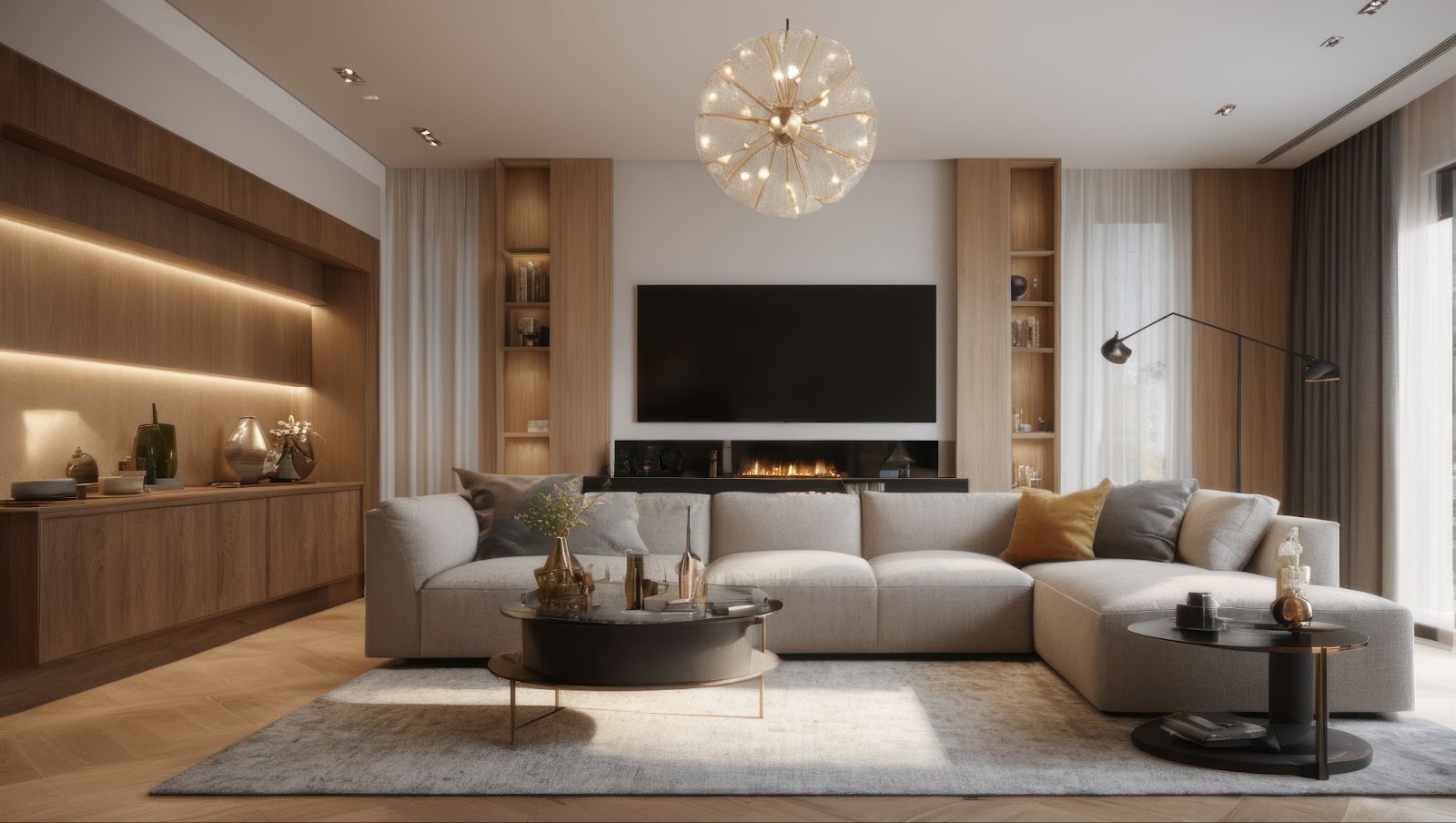
Incorporate linear LED cove lighting along the perimeter of the ceiling or behind a media console to create a soft, indirect wash of light that makes the room feel larger and more luxurious. All fixtures in this room should be connected to dimmer switches to allow for seamless transition between moods.
The Serene Primary Bedroom
The bedroom should serve as a retreat from daytime stimulation. Avoid placing recessed lights directly over the bed structure, as staring up into a bright light bulb while lying down is uncomfortable.
Instead, rely on elegant bedside wall sconces or low-hanging pendants that cast soft light down onto nightstands. Incorporate low-voltage LED strip lights inside closets that trigger automatically when the door opens, combining premium convenience with clean design.
The Gallery-Style Bathroom
Traditional bathroom layouts utilize a single strip of lights directly above the mirror, which casts harsh downward shadows under the eyes and nose, making grooming difficult. Modern design avoids this by placing vertical wall sconces on both sides of the mirror at eye level. This positioning provides balanced, shadow-free illumination across the face. Complement this setup with a dedicated waterproof recessed light inside the shower enclosure for safety and visibility.
Maximizing Natural Light and Architectural Integration
Artificial lighting should always work in tandem with the natural light entering your home. A truly modern interior leverages architectural details to bounce and amplify available daylight.
Consider painting window jambs a bright, reflective white to pull more sunlight deeper into the floor plan. When choosing window treatments, opt for sheer fabrics or motorized solar shades that diffuse harsh afternoon sun without completely blacking out the room.
Furthermore, you can integrate linear light fixtures into architectural elements like floating stairs, underneath floating bathroom vanities, or within recessed ceiling trays. This hidden approach hides the bulb from direct view, ensuring you see only the beautiful illumination rather than the raw hardware.
Frequently Asked Questions
Why do my new LED light bulbs flicker when I turn them down on my dimmer switch?
LED flickering typically occurs when you install modern LED bulbs on an older dimmer switch designed for traditional incandescent bulbs. Older dimmers adjust light output by rapidly cycling the voltage, which confuses the internal electronic circuitry of an LED bulb. To resolve this issue, you need to replace your wall switch with an electronic low-voltage or LED-compatible dimmer.
How high should I hang a pendant light over a kitchen island?
The standard rule of thumb is to hang the bottom of the pendant fixture between 30 and 36 inches above the surface of the countertop. This height provides excellent task lighting without obstructing your field of vision across the kitchen when standing and conversing with guests.
What is CRI and why does it matter for interior home lighting?
CRI stands for Color Rendering Index, and it measures how accurately a light source reveals the true colors of objects compared to natural sunlight. The scale runs from 0 to 100. For a modern interior, always look for light bulbs with a CRI rating of 90 or above. This ensures your paint colors, wood grain tones, and fabrics look vibrant and true to life rather than muted or gray.
Can I mix different color temperatures in the same open-concept room?
It is best to avoid mixing radically different color temperatures within a single visual field, as the contrast can look jarring and uncoordinated. In an open-concept living and kitchen area, stick to a uniform base temperature, such as 3000K or 3500K, for all ambient fixtures to keep the entire space cohesive.
Are smart light bulbs superior to standard LED light bulbs for home design?
Smart bulbs offer incredible flexibility because they allow you to adjust both brightness and color temperature dynamically through a smartphone application or voice command. This technology allows you to use a crisp, cool white light for cleaning the room during the morning hours, and automatically transition to a soft, warm amber glow as the evening approaches.
How do I prevent glare on my television screen when planning a living room layout?
To prevent distracting reflections on display screens, avoid positioning open light fixtures or bright accent lights directly opposite the television wall. Instead, opt for hidden, indirect lighting methods like LED backing strips attached to the rear of the television housing, or use highly directional recessed trim kits that focus light straight down onto the floor rather than outward toward the screen.