Keeping children active at home can feel challenging, especially when screens are always nearby. Many families have busy schedules, limited outdoor space, or children who would rather stay indoors. Still, physical activity does not always require formal sports, gym classes, or long trips to the park. With a few simple changes, home can become a place where movement happens naturally.
Children need regular activity for strength, balance, coordination, mood, sleep, and confidence. The good news is that most children enjoy movement when it feels like play rather than exercise. Parents can support this by creating small opportunities throughout the day.
Make Movement Part of the Daily Routine
The easiest way to keep children active is to make movement part of normal life. It does not have to be a separate event. Short bursts of activity can be just as useful as one long session.
For example, children can stretch after waking up, play outside after school, help carry light groceries, race to tidy up toys, or dance while music plays. These moments may seem small, but they reduce long periods of sitting.
Parents can also connect movement to existing routines. Before screen time, children can spend 20 minutes outside. Before dinner, they can complete a simple backyard challenge. On weekends, the family can start the morning with a walk or ball game.
Turn the Backyard Into an Activity Space
A backyard does not need to be large to encourage movement. Children can use even a small outdoor area for skipping, jumping, crawling, balancing, and throwing games. The key is to keep the space open enough for safe movement.
Parents can create simple activity stations. One corner can be for ball play. Another can be for balance games. A clear path can become a running track or obstacle route. Children often enjoy spaces more when they feel like they have options.
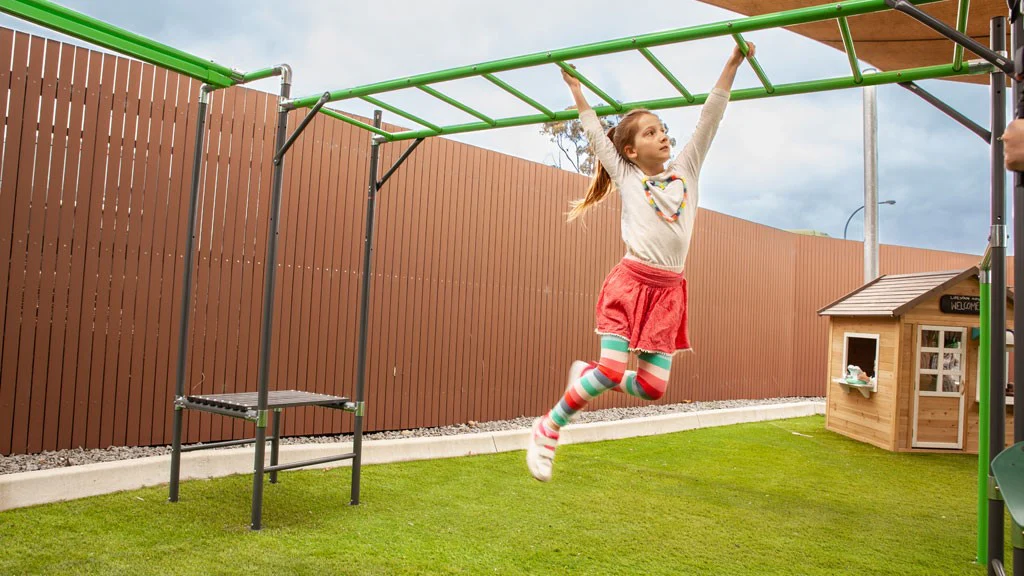
Climbing-based play is especially useful because it builds grip strength, upper-body control, balance, and confidence. Many families include equipment such as Monkey Bars in outdoor play areas because it encourages children to move in a way that feels fun rather than forced.
Use Indoor Movement on Bad Weather Days
Rain, heat, or cold weather can interrupt outdoor play, but children can still stay active indoors. The goal is to create safe movement without damaging furniture or causing stress.
Simple indoor activities can include animal walks, yoga poses, dance games, balloon volleyball, hallway bowling with soft items, or a living room obstacle course using cushions. Parents can set clear rules about where movement is allowed and what items are off-limits.
For younger children, pretend play works well. They can crawl like bears, hop like frogs, stretch like cats, or walk carefully like tightrope performers. Older children may enjoy timed challenges, such as how many squats, star jumps, or balance holds they can do in a minute.
Encourage Strength Through Play
Children do not need adult-style workouts to build strength. Play already includes many useful movements. Climbing, crawling, hanging, pushing, pulling, squatting, and jumping all help develop the body.
The best strength-building activities are usually simple. A child pulling themselves up, crawling under a chair, carrying a small bucket of toys, or jumping over a low cushion is using muscles in a practical way.
Parents should focus on variety rather than intensity. Children benefit from using different parts of the body. Too much repetition can become boring, while varied play keeps them engaged.
Balance Screen Time With Active Breaks
Screens are part of modern life, and removing them completely is not realistic for many families. A more practical approach is to balance screen time with active breaks.
For every long screen session, parents can encourage a short movement break. This might include stretching, running outside, doing a few jumps, or helping with a household task. These breaks support posture, circulation, and attention.
Children may resist at first if they are used to long uninterrupted screen time. A clear routine helps. For example, after 30 minutes of screen use, they take a 10-minute active break. Over time, this becomes normal.
Make Physical Activity Social
Children are often more active when play involves other people. Siblings, parents, neighbours, and friends can all make movement more exciting.
Family games do not need to be complicated. A simple race, ball toss, treasure hunt, or obstacle challenge can keep children moving. Parents can also create friendly competitions, such as who can balance the longest or complete a backyard route the fastest.
Social play also teaches cooperation. Children learn to take turns, follow rules, solve disagreements, and encourage one another.
Let Children Choose Activities
Children are more likely to stay active when they have some control. Instead of always telling them what to do, parents can offer choices.
For example, ask whether they want to play a running game, build an obstacle course, dance, climb, or ride a scooter. Giving choices helps children feel involved. It also shows parents which activities truly interest them.
Some children love energetic play. Others prefer slower activities like walking, gardening, or stretching. Both can be valuable. The aim is regular movement, not forcing every child into the same style of activity.
Keep It Fun and Realistic
Parents sometimes give up because they imagine physical activity must be perfectly planned. It does not. Children can stay active through ordinary play, short routines, and simple home setups.
The goal is consistency. A child who moves for short periods every day will benefit more than a child who only gets one long activity session occasionally. Small habits matter.
It also helps to celebrate effort rather than performance. Praise children for trying, practising, and improving. This keeps movement positive and builds confidence.
Final Thoughts
Keeping children physically active at home is not about creating a strict fitness programme. It is about making movement easy, fun, and regular. With a little planning, families can use their home, backyard, and daily routines to support healthier habits.
Children naturally want to move when the environment encourages it. By offering active choices, balancing screen time, using outdoor spaces, and joining in from time to time, parents can help children build strength, confidence, and a better relationship with physical activity.