Choosing a dining table involves more than picking a shape and finish. The base structure has a significant impact on comfort, seating capacity and how the table fits into the room. While four-leg tables are the most familiar option, pedestal tables, supported by a single central column or base, offer distinct advantages in certain situations. If you are planning a customised dining table, understanding when a pedestal design works best can help you create a piece that suits both your space and the way your household dines.
Signs That a Pedestal Table May Be the Better Choice
The following situations suggest that a pedestal base could offer more practical benefits than a traditional four-leg design.
Your Dining Area Is Compact
Every centimeter in smaller apartments and condominiums counts. That said, without legs at the corners, a pedestal table allows chairs to tuck in more closely and makes it easier to move around the table in tight spaces. Round or oval versions can also improve traffic flow.
You Want to Seat More People Comfortably
Four-leg tables can limit seating, as guests at the corners may bump their knees against the legs. A pedestal base frees up legroom around the entire perimeter, making it easier to squeeze in an extra chair or two during family gatherings and festive meals. This flexibility is especially useful for households that regularly host relatives or friends.
You Prefer a Round or Oval Shape
Pedestal bases are naturally suited to round and oval tabletops, as the central support distributes weight evenly. These shapes encourage conversation, since everyone can see and speak to one another easily. They also eliminate sharp corners, which many families with young children appreciate.
Your Dining Space Doubles as a Breakfast Nook or Work Area
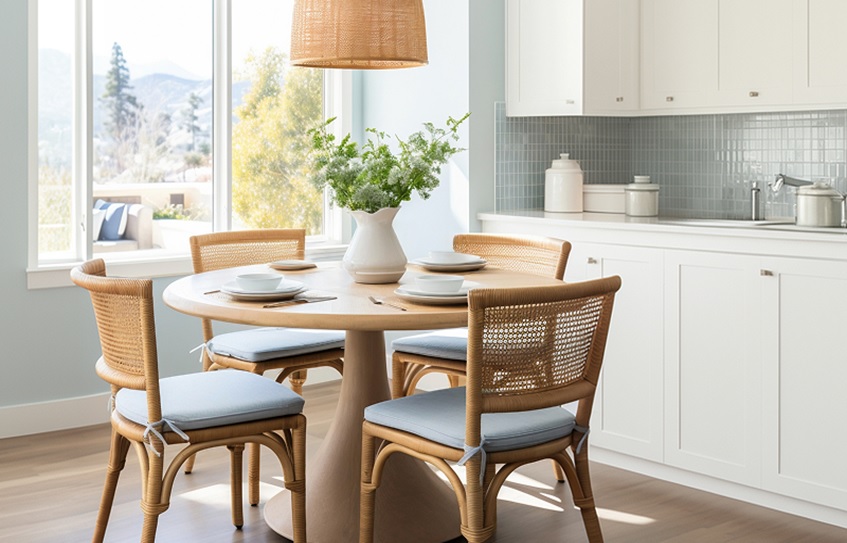
The dining table often serves multiple purposes in open-plan layouts. A pedestal design fits neatly into corners, bay windows or banquette seating, where four legs might obstruct benches or built-in seats. Many local households selecting home furniture in Singapore choose pedestal tables for dining nooks beside kitchen islands or windows, where space is limited but versatility matters.
You Want a Sculptural Statement
Pedestal bases can be crafted in striking forms, such as tulip-style flares, chunky stone columns or crossed timber supports. This allows the base to become a design feature in its own right, adding character to minimalist or contemporary interiors. Pairing the base with a contrasting tabletop can make the design feel even more distinctive, and matching the finish to nearby cabinetry helps tie the room together.
When a Four-Leg Table May Still Be the Better Option
Pedestal tables are not suitable for every situation. A four-leg design may make more sense when:
- You need a long rectangular table for large families or frequent dinner parties, as long pedestal tables may require double bases for stability.
- The tabletop is very heavy, such as thick marble or sintered stone, and needs support at each corner.
- You prefer a traditional or farmhouse style that suits classic legs.
- Young children or pets may lean heavily on the table edges, where four legs can feel more stable.
- You want to extend the table frequently, as some extension mechanisms work more easily with four-leg frames.
Discussing tabletop material, size, and expected use with a furniture maker can help determine which base will provide the right balance of stability and style. Sitting at both styles in a showroom can also clarify which feels more comfortable.
Choosing a Base That Suits Your Lifestyle
The best base is the one that fits how you live, eat and entertain. That said, by considering room size, seating needs, preferred shape and the weight of the tabletop, you can choose a design that feels comfortable every day and creates a welcoming setting for shared meals for years to come.
Working with a compact dining area? Contact Casa Concetto to browse our pedestal dining tables today.