When building, remodeling, or refreshing a home, selecting the right flooring material is one of the most critical decisions a homeowner can face. The ideal surface must strike a delicate balance between visual charm, long-term durability, maintenance requirements, and upfront cost. For decades, natural materials like solid hardwood, marble, and ceramic tile were considered the gold standards of luxury real estate. However, modern manufacturing innovations have introduced high-performance alternatives that actively challenge these traditional options.
Luxury Vinyl Tile, commonly referred to as LVT, has surged in popularity across both residential and commercial spaces. Once associated with the flimsy, dated sheet vinyl floors of the mid-twentieth century, modern luxury vinyl is a completely reinvented, multi-layered engineered material. Despite its growing popularity, property owners frequently ask whether this synthetic surfacing option is truly a sound financial and functional investment or simply a temporary design trend. Evaluating the engineering, performance metrics, and lifetime value of LVT reveals why it has become a premier choice for modern homes.
The Engineering Behind Modern Luxury Vinyl Tile
To understand the value of LVT, you must look at how it is constructed. Unlike standard sheet vinyl, which is thin and flexible, luxury vinyl tile is a rigid or semi-rigid product composed of multiple specialized layers engineered to perform specific functions.
-
The Underlayment Backing Layer: The base layer provides structural stability and cushioning. Many premium LVT products feature an attached cork or sound-dampening foam underlayment, which absorbs sound vibrations and masks minor imperfections in the concrete or wood subfloor underneath.
-
The Core Layer: This is the thickest component, providing structural integrity and impact resistance. High-end LVT utilizes either a Wood Plastic Composite or a Stone Plastic Composite core. The stone-based core is exceptionally dense and rigid, rendering the tile virtually immune to indentation from heavy furniture or dropped objects.
-
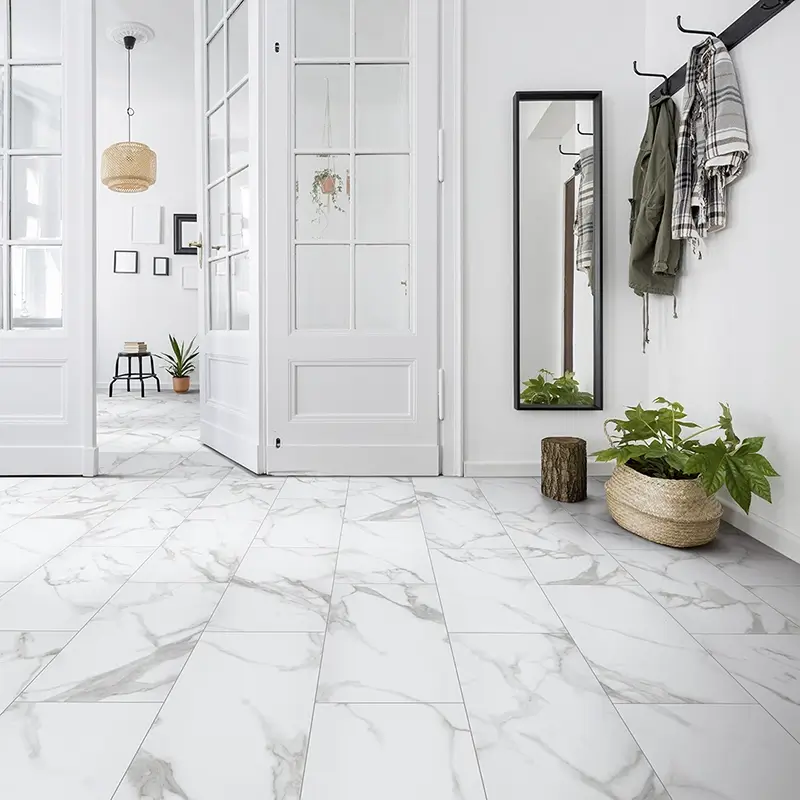
The Photographic Print Layer: This layer delivers the visual appeal of the floor. High-definition 3D printing techniques capture the subtle grain variations, mineral streaks, knots, and textures of high-end natural materials like white oak, slate, travertine, or Carrara marble.
-
The Clear Wear Layer: Sitting directly above the photographic print, this transparent crystalline layer protects the design from physical damage. Measured in mils, a thicker wear layer translates directly to greater resistance against scuffs, scratches, and traffic wear.
-
The Polyurethane Topcoat: The uppermost seal often incorporates microscopic ceramic beads or diamond dust particles. This finish resists stains, prevents fading from solar ultraviolet rays, and makes the surface exceptionally easy to clean.
Absolute Waterproof Performance and Spatial Versatility
One of the greatest limitations of natural solid hardwood and classic laminate flooring is their vulnerability to moisture. Accidental plumbing leaks, high atmospheric humidity, and daily spills can cause real wood to warp, cup, buckle, and grow mold, effectively ruining a massive financial investment. This reality has historically restricted wood flooring to low-moisture zones like bedrooms and living rooms.
Luxury vinyl tile is entirely waterproof from the top surface through to the backing layer. Because the internal stone or synthetic core does not absorb water, the tiles will not expand, contract, or lose structural integrity when submerged or exposed to standing water.
This moisture immunity unlocks immense design versatility across an open-concept floor plan. Homeowners can install the exact same elegant wood-look or marble-look flooring continuously through the living room, kitchen, mudroom, and primary bathrooms without installing unsightly transition strips at the doorframes. This seamless continuity creates an open, expansive, and cohesive aesthetic that elevates the architectural flow of modern homes.
Superior Durability for Active Households
For active families with young children, large pets, and high foot traffic, maintaining the pristine appearance of natural stone or polished hardwood can feel like a stressful, full-time chore. Dog claws can easily gouge soft pine or oak floors, while dropped heavy pots can fracture delicate ceramic tiles.
LVT is engineered to endure daily domestic chaos. The tough wear layer combined with a rigid core provides exceptional resilience against impacts and abrasions. While it is not entirely scratch-proof, luxury vinyl handles the friction of sliding chairs, pet activity, and dropped items significantly better than traditional wood or polished stone. Furthermore, unlike ceramic and porcelain tiles, LVT possesses a degree of physical elasticity. This means that if a glass cup slips from a kitchen counter onto a luxury vinyl floor, the floor absorbs the impact energy, drastically reducing the likelihood of the glass shattering or the tile cracking.
Thermal Comfort and Acoustic Dampening
Traditional ceramic tiles and natural stone slabs are notoriously cold and unyielding underfoot, particularly during the winter months. Walking across a cold stone floor barefoot can make a home feel drafty and uninviting. Additionally, hard ceramic surfaces reflect sound waves, creating an echo-chamber effect that amplifies televisions, footsteps, and loud conversations across open spaces.
Luxury vinyl tile addresses these sensory concerns directly. Synthetic resins and composite stone cores retain ambient room temperature far better than porcelain or marble, making the surface naturally warmer to the touch.
When paired with a high-quality integrated acoustic backing, LVT cushions your joints as you walk, providing a comfortable stepping surface. This acoustic underlayment breaks up sound energy rather than reflecting it, dampening the sound of clicking pet nails and heavy footsteps, which is especially beneficial in multi-story homes or busy apartments.
Low Maintenance Demands and Lifetime Value
The true value of a flooring investment cannot be measured solely by the initial purchase price; you must factor in the time, effort, and financial resources required to maintain the surface over its lifespan.
Solid hardwood requires periodic sanding, staining, and resealing every decade to preserve its beauty, alongside specialized wood cleaners. Natural stone requires routine chemical sealing to prevent porous surfaces from absorbing juice, wine, or oil stains. Grout lines between traditional tiles require aggressive scrubbing to prevent discoloration and bacterial growth.
LVT requires no sealing, waxing, or specialized chemical treatments over its entire operational life. Maintaining its pristine look involves nothing more than regular sweeping or vacuuming with a soft brush attachment, followed by occasional damp mopping with a gentle, pH-neutral clear cleaner. The lack of grout lines completely eliminates a primary breeding ground for dirt and allergens, saving homeowners thousands of hours of intense maintenance labor.
Realizing Contemporary Interior Design Value
Investing in high-grade synthetic composites allows property owners to achieve the exact aesthetic profile of rare natural stone layouts while enjoying superior everyday durability and stain resistance.
Frequently Asked Questions
What is the difference between LVT and LVP flooring?
Luxury Vinyl Tile and Luxury Vinyl Plank are fundamentally the same engineered material, sharing the exact same internal composition, wear layers, and installation methods. The sole distinction lies in their physical shape and visual design. LVP is manufactured in long, narrow rectangular strips designed to mimic traditional wood planks. LVT is manufactured in square or wider rectangular dimensions designed to replicate the appearance of natural stone, slate, concrete, or ceramic tiles, often including printed or textured faux grout lines along the edges.
How do I determine the ideal wear layer thickness when purchasing luxury vinyl flooring?
The thickness of the transparent wear layer is measured in mils, which represents one-thousandth of an inch. For residential spaces with lower traffic, such as guest bedrooms, a twelve-mil wear layer is sufficient. For active family households with pets and heavy foot traffic in main living zones, you should look for a minimum thickness of twenty mils. Commercial settings or spaces experiencing extreme traffic levels often utilize twenty-eight to thirty-mil wear layers to ensure maximum resistance against deep scratches and finish degradation.
Is luxury vinyl tile compatible with residential underfloor radiant heating systems?
Yes, LVT is highly compatible with both electric and hydronic underfloor radiant heating systems. The material transfers thermal energy efficiently without warping, cracking, or off-gassing, provided the floor temperature stays within the boundaries specified by the manufacturer. Most LVT manufacturers recommend keeping the radiant heat temperature below eighty-five degrees Fahrenheit to protect the underlying adhesive or click-lock locking mechanisms from expanding excessively or loosening.
What is the difference between click-lock floating LVT and glue-down LVT?
Click-lock LVT features interlocking tongue-and-groove profiles along the tile edges, allowing the floor to float loosely over a stable subfloor without any liquid adhesives. This method is highly popular for DIY installations and allows individual tiles to be replaced easily if damaged. Glue-down LVT requires a specialized pressure-sensitive adhesive to be troweled across the subfloor before pressing the tiles firmly into place. The glue-down method is preferred for large commercial spaces or areas with heavy rolling loads, as it completely eliminates any horizontal or vertical shifting.
Will heavy appliances or furniture leave permanent indentations on luxury vinyl tile?
Whether LVT develops indentations depends entirely on the specific core construction of the product. Traditional flexible luxury vinyl or models with low-density foam cores can develop permanent indentations under heavy weights like refrigerators or massive solid wood armoires. However, LVT constructed with a Stone Plastic Composite core is exceptionally dense and rigid, offering superior resistance to heavy loads. To protect your investment regardless of the core type, it is wise to place wide felt floor protectors under the legs of heavy furniture.
Does luxury vinyl tile scratch as easily as traditional laminate flooring?
Modern premium LVT generally resists deep scratches better than older generations of traditional laminate flooring. Traditional laminates utilize a rigid, resin-infused paper top layer that can chip or scratch under sharp forces, which cannot easily be repaired once breached. LVT uses a flexible, elastic polyurethane wear layer often enhanced with advanced additives like microscopic aluminum oxide or ceramic beads. This flexible composition allows the surface to deflect sharp impacts more effectively, reducing the likelihood of deep, visible scratching from daily family activity.