An air conditioner often gives small warning signs before comfort drops. Rooms may take longer to cool, airflow may feel weaker, or the system may run longer before reaching the thermostat setting. These changes do not always mean a major failure, but they may point to parts that need cleaning, testing, or adjustment.
AC Maintenance gives technicians an opportunity to inspect, clean, test, and adjust important system components before heavy cooling demand begins. A thorough visit looks at airflow, heat transfer, drainage, electrical operation, and temperature control.
Scheduling AC Maintenance in Elm gives technicians a chance to check airflow, electrical parts, refrigerant performance, drainage, and thermostat operation before small issues become more disruptive. Regular service may also make it easier to spot worn components and keep the cooling system running more consistently during periods of heavy use.
Start With Airflow
Good cooling depends on moving enough air through the system.
A maintenance visit often begins with the air filter because a dirty filter may restrict airflow and make the blower work harder. Technicians may also inspect the blower assembly, supply vents, and return openings.
Weak airflow may leave some rooms warmer than others or make the air conditioner run longer than normal. If the filter looks clean but airflow still feels low, the cause may be elsewhere in the system.
AC Maintenance gives the technician a chance to compare airflow with the condition of the blower and other components before assuming the cooling equipment itself is at fault.
Clean the Parts That Move Heat
Cooling depends on moving heat from inside the house to the outdoors. The evaporator coil absorbs heat indoors, while the condenser coil releases it outside.
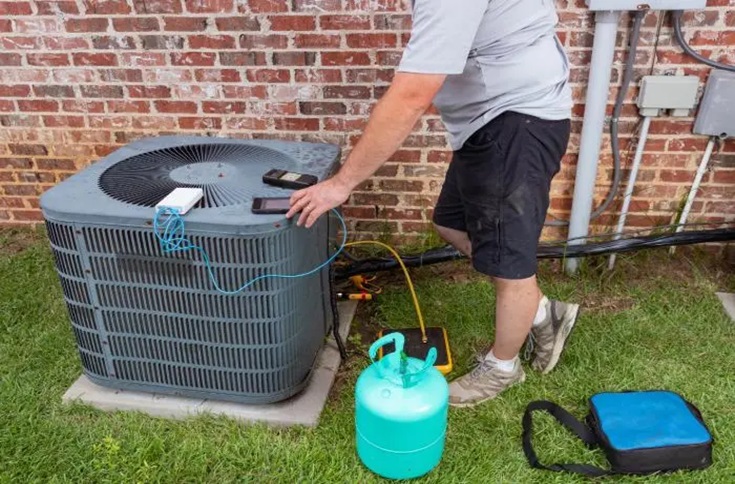
Dirt and debris may interfere with this process. During service, the technician may inspect the indoor coil, remove accessible buildup, and check the outdoor condenser for grass, leaves, or other debris. The area around the outdoor unit should also have open space for air to move freely.
When coils stay cleaner, the system does not have to work against the same level of buildup.
Review Refrigerant Performance
Refrigerant plays a central role in cooling, but poor performance does not automatically mean the system needs more of it.
A technician may review system pressures, temperature differences, and other operating readings to see if the refrigerant side is performing as expected. Signs of a leak or unusual readings may require further testing.
Simply adding refrigerant without understanding why the level changed may leave the underlying issue unresolved.
AC Maintenance may uncover signs of refrigerant trouble before the system loses cooling completely. Finding those signs during routine service gives the property owner more information before the problem becomes more disruptive.
Test Electrical Components
Air conditioners depend on electrical parts every time they start, run, and shut down.
A maintenance visit may include checking capacitors, contactors, wiring, electrical connections, and disconnects. The technician may also watch how the equipment starts and stops.
Worn electrical parts may cause hard starting, intermittent operation, short cycling, or sudden shutdowns. Loose connections may also create performance problems that are difficult to identify from the thermostat alone.
Electrical inspection belongs in professional service because these parts carry power and require proper tools and safety practices.
Check the Condensate Drain
Cooling also removes moisture from indoor air. That moisture collects as condensation and needs a clear path out of the system.
A blocked drain line or damaged drain pan may lead to water around the indoor unit. Some systems also use float switches that stop operation when water backs up.
During service, the technician may inspect the drain line, check the pan, look for standing water, and test switches when present.
This part of AC Maintenance is easy to overlook because the drain is not part of the cooling cycle people usually notice. Still, poor drainage may cause water problems or shut the system down when cooling is needed most.
Review the Thermostat and Controls
The thermostat tells the system when to start and stop, so accurate communication matters.
A technician may check thermostat settings, temperature response, cycling behavior, schedules, and the connection between the thermostat and HVAC equipment.
Sometimes a comfort complaint begins with a control issue rather than a failed mechanical part. An incorrect schedule, weak thermostat response, or short cycling pattern may affect comfort even when the main equipment is still operating.
Checking the controls during service gives a clearer picture of how the system behaves from the first cooling call to the end of each cycle. Seeing the unit operate gives more context for anything that may need further attention.
Use the Visit to Plan Ahead
Routine service may reveal parts that still work but show signs of wear.
A technician might find a weak capacitor, restricted airflow, drainage buildup, a dirty coil, or another condition that deserves monitoring. Finding these issues during a scheduled visit gives the property owner time to understand the situation before a breakdown forces an immediate decision.
Not every worn part needs replacement during the same visit. The value comes from knowing what is happening and what changes to watch for as the season continues.
Conclusion
Regular cooling service involves much more than changing an air filter. Airflow checks, coil cleaning, refrigerant evaluation, electrical testing, condensate inspection, thermostat review, and a full operating check all contribute useful information about system condition.
A well-maintained system is easier to understand because developing problems are more likely to be noticed before they become severe. Routine service also gives property owners a clearer idea of how the equipment is performing as cooling demand increases.
If your air conditioner is running longer, cooling unevenly, or due for seasonal service, contact Little Elm AC Repair Specialists to schedule professional maintenance and discuss the condition of your cooling system.